Figures verified against Romania's General Inspectorate for Immigration (IGI), ANAF (tax authority), Law 22/2022 and Law 69/2023, and cross-checked with PwC Tax Summaries.
Romania's digital nomad visa: a local's honest take
Romania introduced its digital nomad visa in late 2021, and since then two things have changed the picture: Romania joined the Schengen Area fully in 2025, and the fiscal rules were clarified under Law 69/2023. The visa is now one of the more powerful options for non-EU citizens who want an Eastern European base with a flat 10% tax ceiling and unrestricted Schengen travel. But there's a catch nobody states plainly: the income requirement is steep — around €5,400 per month — for a country where €2,000 already buys an upper-middle-class life. I'm Romanian, based in Bucharest, so this guide is written from the inside.
Founder's perspective
What I'd tell a friend considering this visa
I live in Bucharest, so let me be straight with you about what the brochures won't say. First, the income requirement is the real filter. At roughly €5,400/month (three times the Romanian average gross salary), the bar is set high — ironically higher than what you'd actually need to live very well here. I know people in Bucharest living comfortably, eating out regularly, in a good central apartment, for €1,500-2,000 a month. So the visa isn't gatekept by cost of living; it's gatekept by a formula tied to the national average wage. If you clear the income bar, your money goes remarkably far once you're here. Second, Bucharest surprises people. The cliché of grey post-communist blocks is outdated. The city has one of the fastest residential internet networks in Europe (Romania consistently ranks top-tier on fixed broadband — a real legacy of the early-2000s fiber boom), a genuinely good café and restaurant scene, the Old Town, parks like Herăstrău, and a cost structure that feels almost unfair compared to Western Europe. Cluj-Napoca and Timișoara are the other two cities worth considering — Cluj especially has a strong tech community. Third, the bureaucracy is real but navigable. Romanian administrative processes reward patience and complete paperwork. The tip locals know: large private clinics like Regina Maria, Medicover, and MedLife in Bucharest have streamlined the medical certificate step for visa applicants — ask specifically for the documents needed for the immigration file and you'll skip a lot of back-and-forth. Bring more copies than you think you need, and expect at least one in-person visit to the immigration office (IGI) even when parts can be done online. Fourth, the language. You can absolutely live in Bucharest, Cluj, or Timișoara in English — the under-40 population speaks it widely, especially in tech and hospitality. Outside the cities it thins out, but for a nomad based in a major city, language is not a barrier the way it is in some neighbouring countries.
How the visa actually works
Step 1 — Long-stay visa for digital nomads (D/AD)
You apply through Romania's eVisa portal before travelling. The visa is for non-EU/EEA/Swiss citizens working remotely for a foreign employer or running a business incorporated outside Romania. You must show income of roughly €5,400/month (RON 26,730 — three times the national average gross salary) for each of the last six months. Processing typically takes 30-45 days. Visa fee is around €120.
Step 2 — Convert to a residence permit
Once your visa is approved you have 90 days to enter Romania, and you must apply for a temporary residence permit at the General Inspectorate for Immigration (IGI) at least 30 days before your 90-day entry stamp expires. The residence permit fees total roughly €120-170. The permit is valid for 12 months and renewable annually. This residence card is what gives you legal long-term status and Schengen travel.
What you actually need
Core requirements: proof of remote income of ~€5,400/month for the prior six months (employment contract with a foreign company, or proof of a business incorporated abroad); a clean criminal record certificate from your country of residence; travel/medical insurance with minimum €30,000 coverage; proof of accommodation in Romania; and the relevant application forms via the eVisa portal. You may not take local employment with a Romanian company or enter the local labour market — your income must remain foreign-sourced throughout. Dependents (spouse, minor children) can join via family reunification once you hold the qualifying permit.
The tax situation: 183 days is the line that matters
This is the part to understand before you book a flight. For the first 183 days of your stay within any 12-month period, you are generally exempt from Romanian income tax and social contributions on your foreign income (the exemption is codified under Law 69/2023), provided you work for a foreign company and not a local one. Cross 183 days and you technically become a Romanian tax resident — at which point you must register with ANAF (the tax authority) within 30 days. The upside: Romania uses a flat 10% personal income tax, one of the lowest in the EU, rather than progressive brackets. So even as a tax resident, the rate is gentle by European standards. Two things to note for 2026: dividend tax rose to 16% (from 8%), and social contributions (health/pension) may apply depending on your structure and income level. The interaction between the 183-day rule, your home country's tax treaty with Romania, and your contract type is where people make expensive mistakes — talk to a Romanian tax advisor before you cross the residency line. This is information, not tax advice.
Who this visa is genuinely good for (and who should look elsewhere)
Ideal for: higher-earning non-EU remote workers (comfortably above €5,400/month) who want a low-tax, full-Schengen European base with an exceptional cost-of-living-to-quality ratio; tech workers and founders who value top-tier internet and a real city tech scene (Bucharest, Cluj); and anyone who wants Eastern European affordability without sacrificing Schengen mobility now that Romania has joined. Not ideal for: anyone earning below the ~€5,400/month threshold (the income bar, not the cost of living, is the binding constraint — and it's high); those wanting to work for Romanian companies (prohibited on this visa); or nomads who only want a short 2-3 month stay (the visa-plus-permit process is built for people committing to a longer base). If the income bar is too high, compare Serbia's flat-tax entrepreneur route or Montenegro's lower-threshold DN visa instead.
Where to base yourself
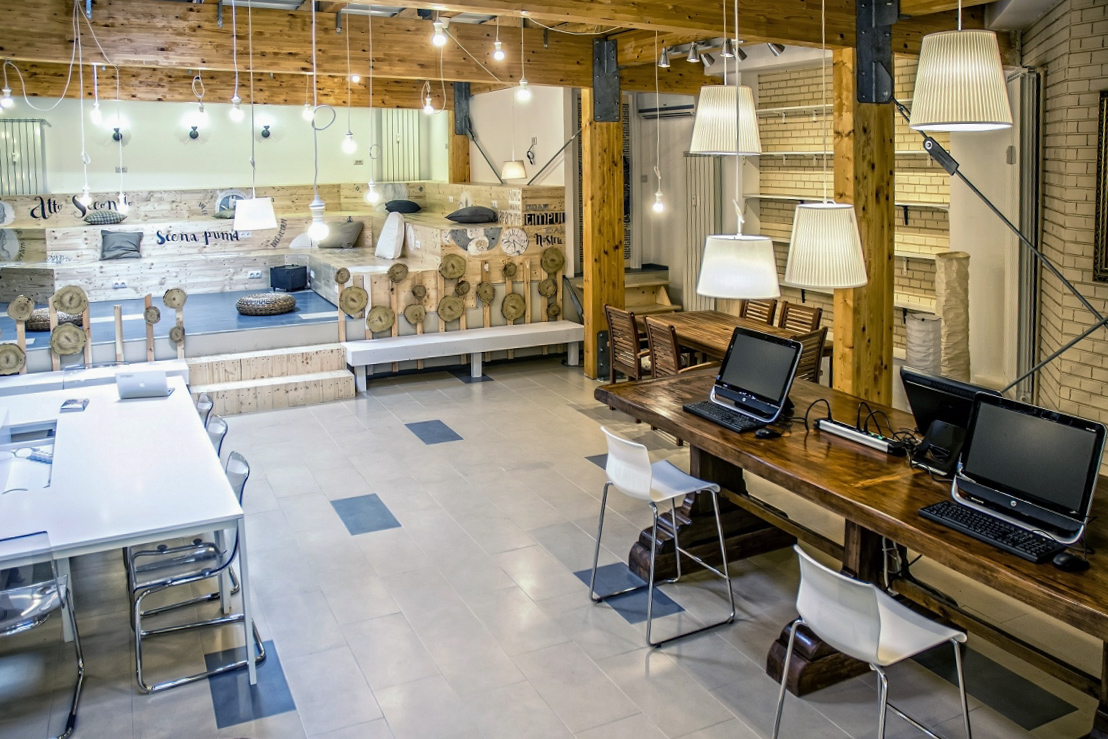
Bucharest is the obvious choice — the capital, the biggest tech and startup scene, the most international community, the best café and restaurant culture, and excellent internet. Budget €1,200-1,800/month all-in for a comfortable single life including a central apartment. Cluj-Napoca is Romania's tech capital in the Transylvanian heart — smaller, younger, university-driven, with a strong IT community and a slightly lower cost base. Timișoara in the west is the third option — a beautiful, walkable city (a former European Capital of Culture) with growing remote-work infrastructure. All three have fast internet; Romania ranks among Europe's best for fixed broadband speed. For coworking, Impact Hub Bucharest (Universitate) is the city's longest-running space — 14 years, 3,330 members, 900 Mbps — and a verified Enomads partner offering a 10% discount to our users.
Honest reality check
Four practical notes. First: the €5,400/month income requirement is the single biggest hurdle — it's tied to the national average wage and updated annually, so verify the current RON figure before applying. Second: budget for at least one in-person visit to the IGI immigration office; not everything can be done online despite the eVisa portal. Third: the 183-day tax line is a hard threshold — track your days carefully if you want to preserve the exemption, and register with ANAF promptly if you cross it. Fourth: Romania is now full Schengen, which is a genuine advantage, but it also means your days here count toward EU presence in the usual way once you're a permit holder — plan your travel accordingly.
Primary sources
How this guide was researched
I'm a Romanian citizen based in Bucharest, so the on-the-ground sections reflect first-hand knowledge of the country, cities, and daily costs. For the legal and fiscal specifics, I cross-referenced the primary legislation (Law 22/2022 establishing the visa, Law 69/2023 on the tax treatment) with the General Inspectorate for Immigration, ANAF guidance, and PwC Tax Summaries for the 2026 rates. The income figure reflects the current three-times-average-wage formula (RON 26,730/month). Where figures change annually — particularly the income threshold — I note that and recommend verifying the live number before applying. Enomads earns no commission from Romanian relocation agencies; this is independent. If anything reads as out of date, email contact@enomads.eu and I'll re-verify.
Requirements & Eligibility
Income
Minimum income of 3× Romania's average gross salary per month. In 2025: approximately RON 25,500/month (~€5,100/month or ~USD $5,500/month) based on Romanian National Statistics Institute average salary data. Income must derive from remote work for non-Romanian employers/clients.
Documents needed
- Valid passport (6+ months validity)
- Completed visa application form
- Passport-size photographs
- Employment contract or service contracts with non-Romanian company (must be valid for at least 12 more months and specify remote work arrangement)
- Proof of income (payslips or bank statements confirming at least 3× average Romanian gross salary for last 3 months)
- Health insurance valid in Romania for full stay
- Clean criminal record certificate (apostilled, translated to Romanian)
- Proof of accommodation in Romania (rental contract, hotel booking, or property deed)
- Proof of IT/telecom means to work remotely.
How to Apply for the Romania DNV
Processing time: Approximately 30 days from application submission at Romanian consulate.
- 1Confirm eligibility (non-EU/EEA; remote worker for non-Romanian employer earning min 3× average Romanian gross salary; contract valid for at least 1 more year).
- 2Gather all required documents (apostilled, translated to Romanian where required).
- 3Apply at nearest Romanian consulate or embassy in home country.
- 4Pay visa fee (~€120).
- 5Wait approximately 30 days for decision.
- 6Enter Romania with visa.
- 7Optional: Apply for long-term residence permit in Romania if staying over 6 months.
Application fees: Consular visa fee: approximately €120 per person. Residence permit fee (if converting visa to permit in Romania): varies — approximately RON 250–500 (~€50–100).
Official sourceNew: Portugal D8 Guide 2026
Moving to Portugal? Skip the guesswork.
60-page playbook for Portugal's D8 Digital Nomad Visa — documents, taxes, timeline, insider tips. Saves you 100+ hours of research.
- Complete document checklist
- Tax breakdown: NHR vs regular
- Application timeline & steps
- Common rejection reasons
Visa Duration & Renewal
Initial duration: 1 year, renewable for additional 1-year periods.
Renewal: Yes — the Digital Nomad Visa (Viza D pentru activitate de muncă la distanță) can be renewed beyond the initial period.
Taxes for Digital Nomads in Romania
No income tax on foreign-sourced earnings if staying under 183 days/year. After 183 days, Romanian income tax at 10% flat rate applies. Romania has one of the lowest flat income tax rates in the EU. No social contributions required for non-residents. Romania has double taxation treaties with many countries.
Living in Romania as a Digital Nomad
See allVerified coworking, cafés and remote-friendly stays in Romania.